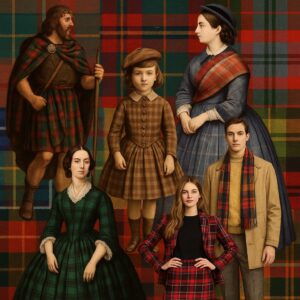

In the 18th century, the tartan was a symbol of rebellion. After the failed Jacobite Rising of 1745, the British government cracked down hard on Highland culture. The Act of Proscription (1746) banned Highland dress, including the tartan, in an effort to suppress clan identity and quash future uprisings. For decades, to be seen in a kilt was to risk arrest—or forced conscription into the army.
Ironically, this brutal suppression only served to romanticize the garb. When the law was finally repealed in 1782, the tartan had become an emblem of nostalgia and resistance. But the garment still remained largely in the shadows—revived mostly during military parades, Highland games, and the occasional noble family event.
Then came Queen Victoria, who did not just revive the tartan—she transformed it into a global fashion.
Victoria and Albert’s Highland Obsession
Queen Victoria first visited Scotland in 1842, just five years after her coronation. She and Prince Albert were instantly captivated by the landscape, the culture, and the romanticized image of the noble Highlander. This wasn’t just a casual admiration—it became a full-blown obsession.
In 1848, they acquired Balmoral Castle, a baronial estate in Aberdeenshire that would become their beloved Highland retreat. But they didn’t just move in—they redesigned it. Albert personally helped redesign the castle in the style of a traditional Highland residence, and Victoria set about transforming its interiors into a shrine to all things Scottish.
That included the tartan.
They commissioned their own royal tartan: the Balmoral Tartan, a subdued grey pattern with red over-checks. Strictly speaking, it has remained a royal exclusive—only members of the royal family and the Queen’s piper are allowed to wear it. But the symbolism was clear: tartan had gone from outlawed cloth to royal uniform.
A Royal Seal of Approval That Changed Everything
The Queen’s visible enthusiasm for tartan sparked a cultural shift. Suddenly, tartan wasn’t just acceptable—it was fashionable.
Aristocrats began reviving old family patterns, commissioning new ones, and wearing them at public events. If you didn’t have a clan tartan, no problem. You could now adopt one—many Lowland and even non-Scottish families did just that. Tailors across Britain, and eventually the Empire, began marketing tartans to customers with little or no Highland connection.
Prince Albert helped standardize these patterns. He took a personal interest in organizing tartans by clan and recording their designs, laying the groundwork for what would become the Scottish Register of Tartans more than a century later.
Soon, tartan décor began popping up in everything from drawing rooms to nursery wallpaper. At Balmoral, Queen Victoria’s servants were reportedly decked out in full Highland garb. Even her dogs had tartan blankets. The royal children wore mini-kilts. Artists were commissioned to paint Highland scenes filled with romanticized details—fierce clansmen, misty glens, and lots and lots of plaid.
Tartan Tourism and Global Impact
The Queen’s affection for the Highlands made Scotland a must-see destination for the fashionable elite. Train lines expanded, inns multiplied, and tourism boomed. Guidebooks flourished. English tourists arrived by the thousands, eager to drink whisky, hunt stags, and—most importantly—buy tartans.
Manufacturers in places like Stirling, Perth, and Edinburgh expanded production to meet the rising demand. Some even invented new tartans to satisfy it—patterns with little historical basis but plenty of romantic appeal. Names like “Jacobite,” “Freedom,” and “Caledonia” sold well regardless of their authenticity.
The export of tartan wasn’t limited to Scotland either. In Canada, Australia, and the United States, Scottish emigrants proudly wore their clan’s patterns—often reinforced by Victoria-era family lore. Even American presidents began to embrace tartan as a mark of distinguished heritage. By the 20th century, tartan had transcended its Scottish origins to become a worldwide symbol of heritage, rebellion, and even punk fashion.
From Rebellion to Royalty—and Beyond
Queen Victoria didn’t invent tartan, but she undeniably resurrected it. What was once a proscribed, regionally limited form of Highland expression became a royal-endorsed, internationally recognized symbol of identity. Her passion for the Highlands helped reshape British—and global—perceptions of Scottish culture. What had once been seen as backward, tribal, and dangerous was now elegant, romantic, and desirable.
Thanks to Queen Victoria, tartan has endured not just as a fashion but as a living heritage. Whether it’s in a regiment’s dress uniform, a punk rock stage outfit, or a hipster’s scarf, tartan still carries the echoes of both rebellion and royalty. It is, perhaps, the only fabric in the world that can claim both.
Adapted From: Moncrieff, A. R. H., & Palmer, S. (1904). Bonnie Scotland. A. & C. Black.
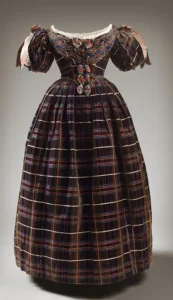
Queen Victoria’s Tartan Dress